In April Bluebells transform woodland floors across the country, including our own woodland, into a beautiful sea of blue.
The Bluebells in Itchen Valley Country Park are native, an indicator of ancient woodland or areas that have been continuously wooded for hundreds of years. The flowers of British Bluebells droop to one side of the stem and have creamy pollen whereas Spanish bluebells, commonly found in gardens, have flowers positioned all around the stem and have blueish pollen. Only British Bluebells have a scent.
Bluebells are perennials, meaning they bloom annually, typically from late March to early May. They are among the last spring flowers to emerge before the woodland canopy closes, blocking sunlight with new leaves. Bluebells often appear first in the South of England, where temperatures are slightly warmer. During spring, bluebells absorb energy from the sunshine and store it in their bulbs for the winter, allowing them to bloom again the following year.
Why are bluebells important? 🌷
Bluebells are a vital part of the UK's natural heritage, with nearly half of the world's bluebell population found in the UK. Due to their importance, delicacy and long recovery time, they are protected under the Wildlife and Countryside Act 1981. This law makes it illegal to dig up bulbs in the wild, and landowners are not permitted to remove or sell them. This legislation is to protect bluebells from exploitative bulb collectors who supply garden centres. In the Country Park bluebell areas have been fenced to try and protect from trampling, as excessive foot traffic can hinder their ability to photosynthesise and reproduce.
What do insects gain from bluebells? 🐝🦋
Bluebells are particularly beneficial to insects because they provide nectar. Since bluebells bloom early in the season compared to other plants, they become an attractive and abundant food source during a time when other food options are scarce. Many insects, including woodland butterflies, bees and hoverflies feed on the nectar of bluebells. The pollen from bluebells is not suitable for honey production, as their nectar is not as sweet as that of other flowers. Interestingly, bees often steal nectar by biting a hole at the bottom of the flower allowing them to access the nectar without needing to pollinate it.
When you walk around the park, take a moment to admire these beautiful plants. Not only do they create a lovely carpet-like effect in the woodland, but they also play a significant role in our English heritage, which we are very fortunate to have.
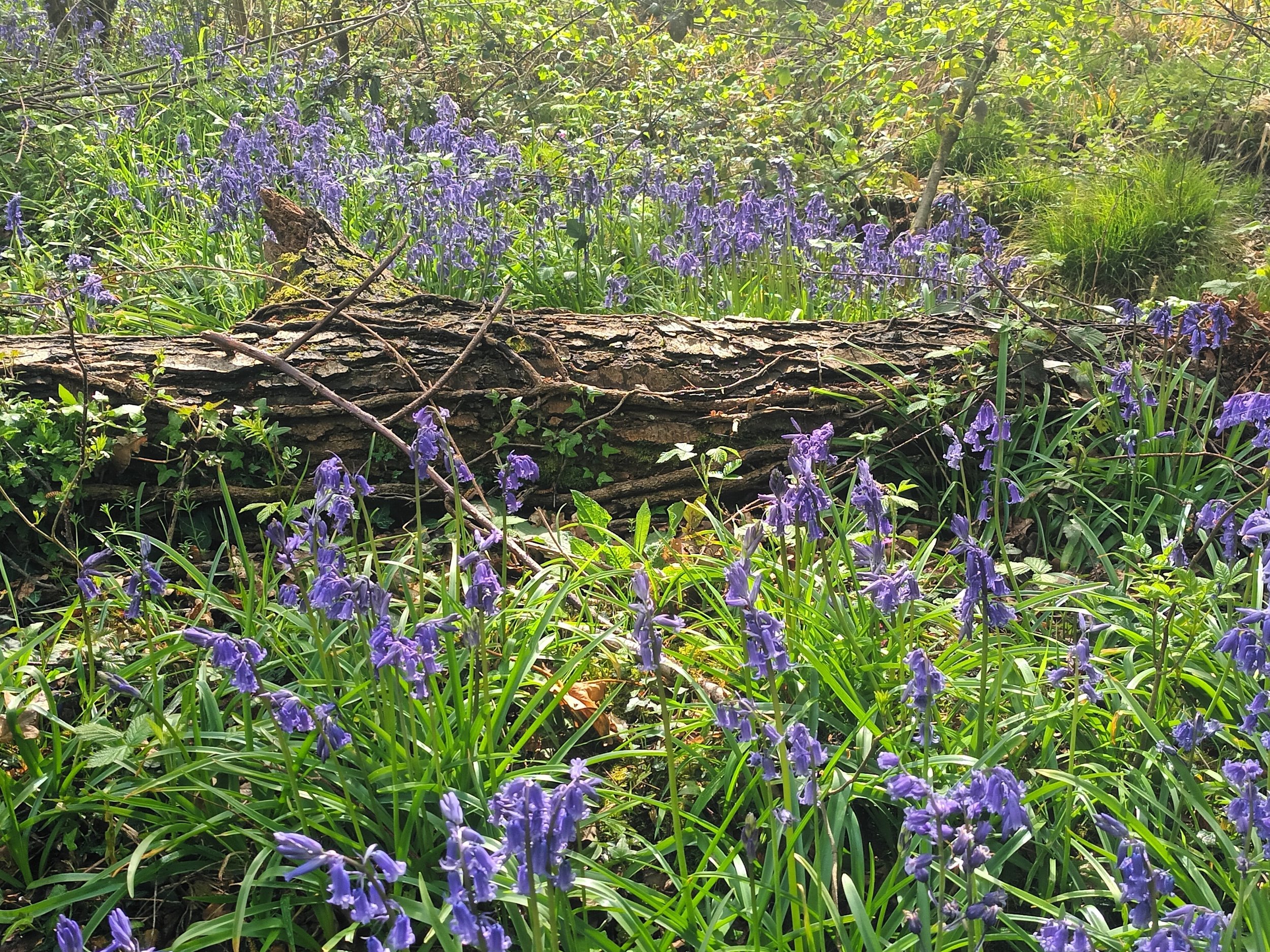
Bluebells in Itchen Valley Country Park